Research
Human-AI Collaboration in ATC — Contrail Avoidance with Eye Tracking
Studying how air traffic controllers process contrail-avoidance guidance on radar displays — and how AI decision-support can surface climate-relevant information without adding to their workload.
- Status
- Active
- Period
- 2026 – Present
Background
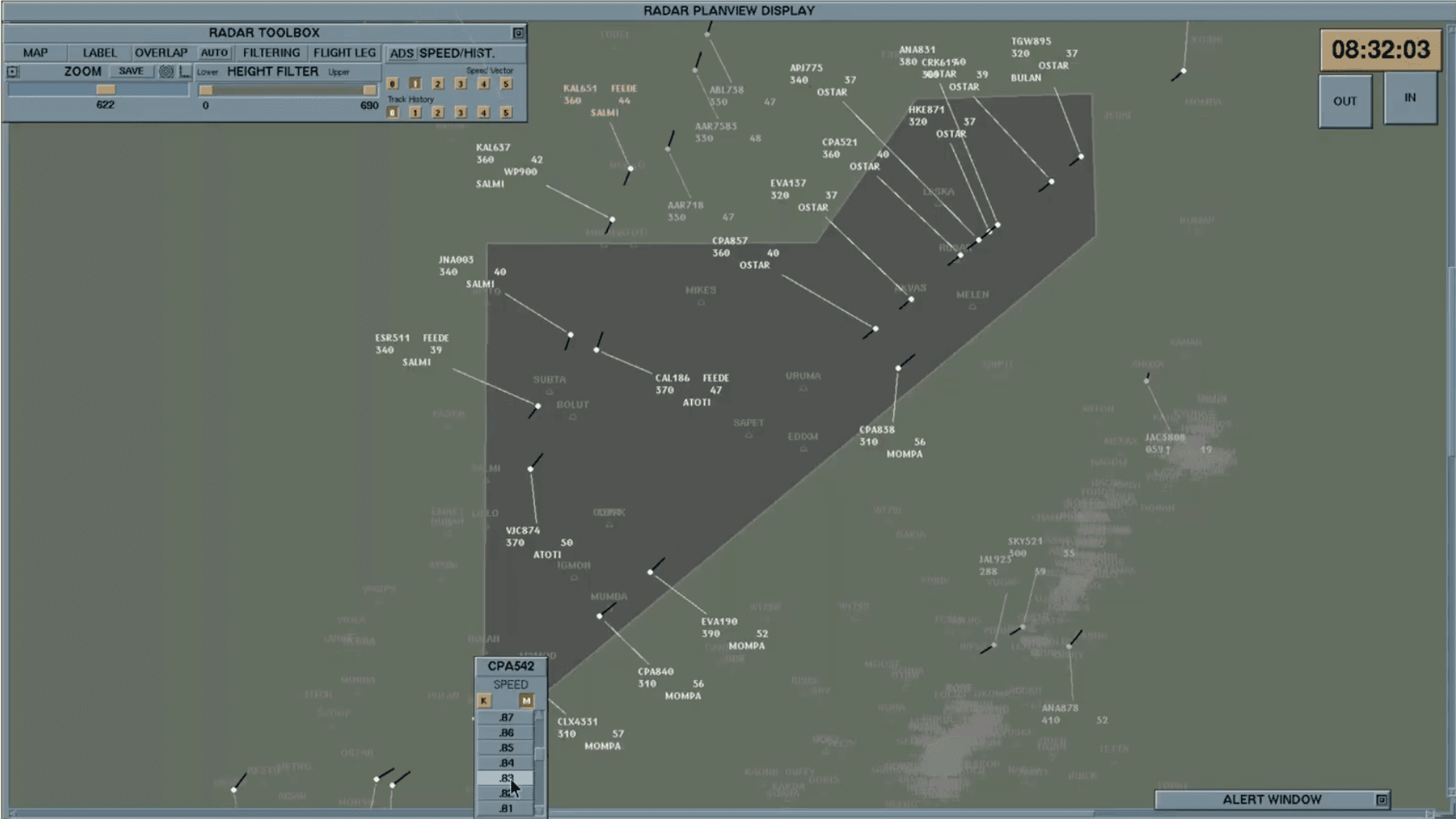
Air traffic controllers now balance safety, efficiency, and climate impact — contrails alone account for an estimated 1–2% of anthropogenic warming. This ongoing research uses eye-tracking on radar planview displays to study how controllers process contrail-avoidance guidance, and how AI decision-support can surface climate-relevant information without adding to their existing workload.
Approach
Participants perform representative ATC tasks while gaze is recorded on the radar display. We combine fixation patterns with task-outcome data to characterise when contrail-avoidance recommendations get read, deferred, or overridden — grounding the design of the next-generation decision-support layer in what controllers actually attend to.