Product & community case study
Loomi — AI Creative Canvas
A tree-based creative software concept for material-guided, iterative exploration.
- Role
- Prototype & Concept — Team とあるパンダ
- Period
- 2026
- Status
- Completed
- Stack
- AI/ML · Product Design · Prototype · Multimodal
One-line summary
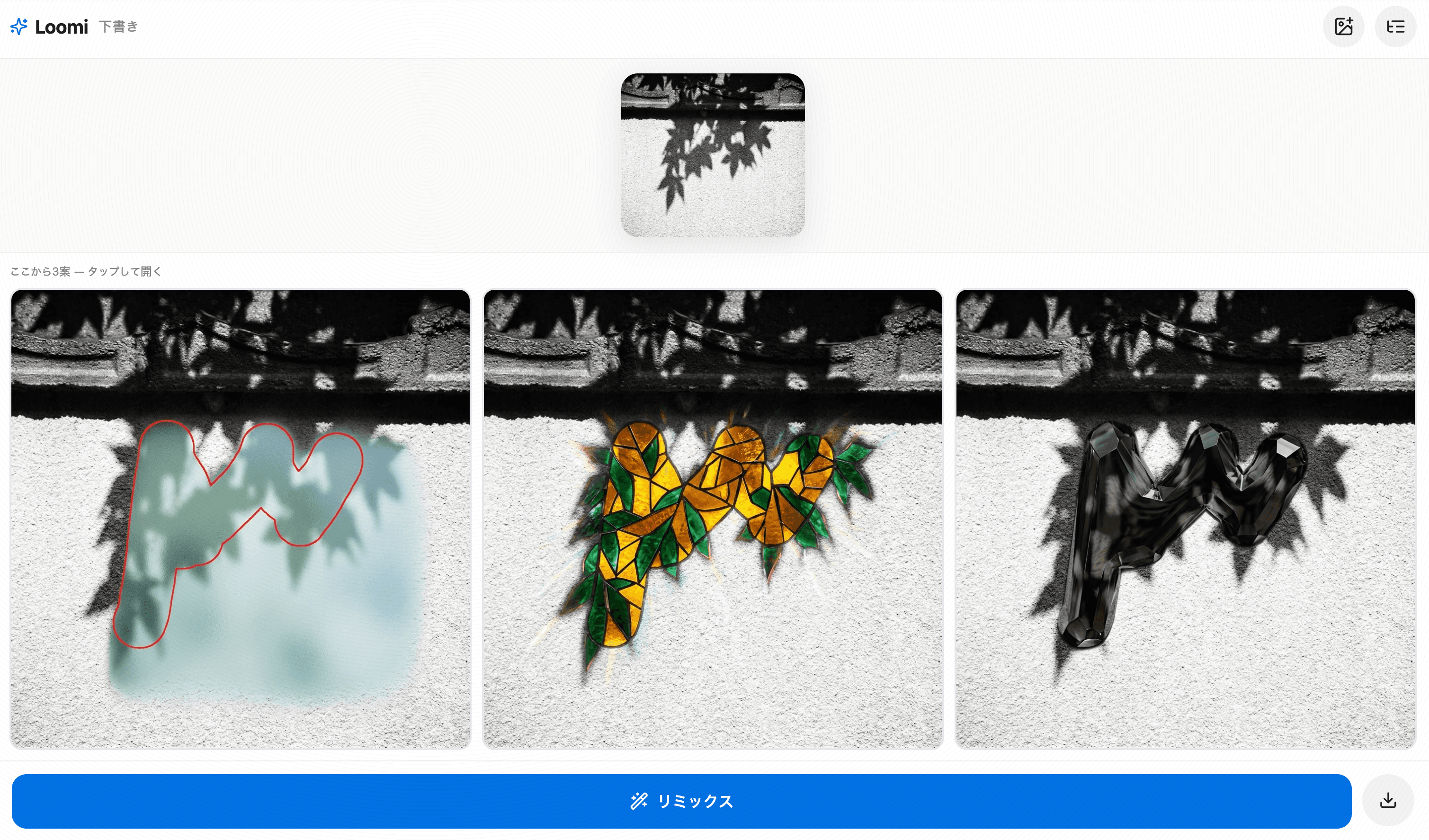
A tree-based, AI-assisted creative canvas that retrieves material attributes such as texture and brightness from a database, applies them to new drafts, and preserves alternative directions for iterative exploration.
At a glance
- 01Problem
- Creators collect fragments of inspiration, but most generative tools jump directly from a prompt to a finished output.
- 02Context
- An AI-and-art hackathon concept developed with Team とあるパンダ.
- 03My contribution
- Co-developed the product concept, interaction model and prototype narrative.
- 04Outcome
- A product concept and prototype narrative connecting a reusable material database, attribute-guided remixing, candidate comparison and a tree of iterative creative branches.
Three-minute walkthrough
The missing middle in AI creation tools
Creative work often begins with colours, textures, images, phrases and unfinished fragments. A prompt-to-output interface skips the slower work of collecting, comparing and recombining those materials, even though that process is where a creator's own direction develops.

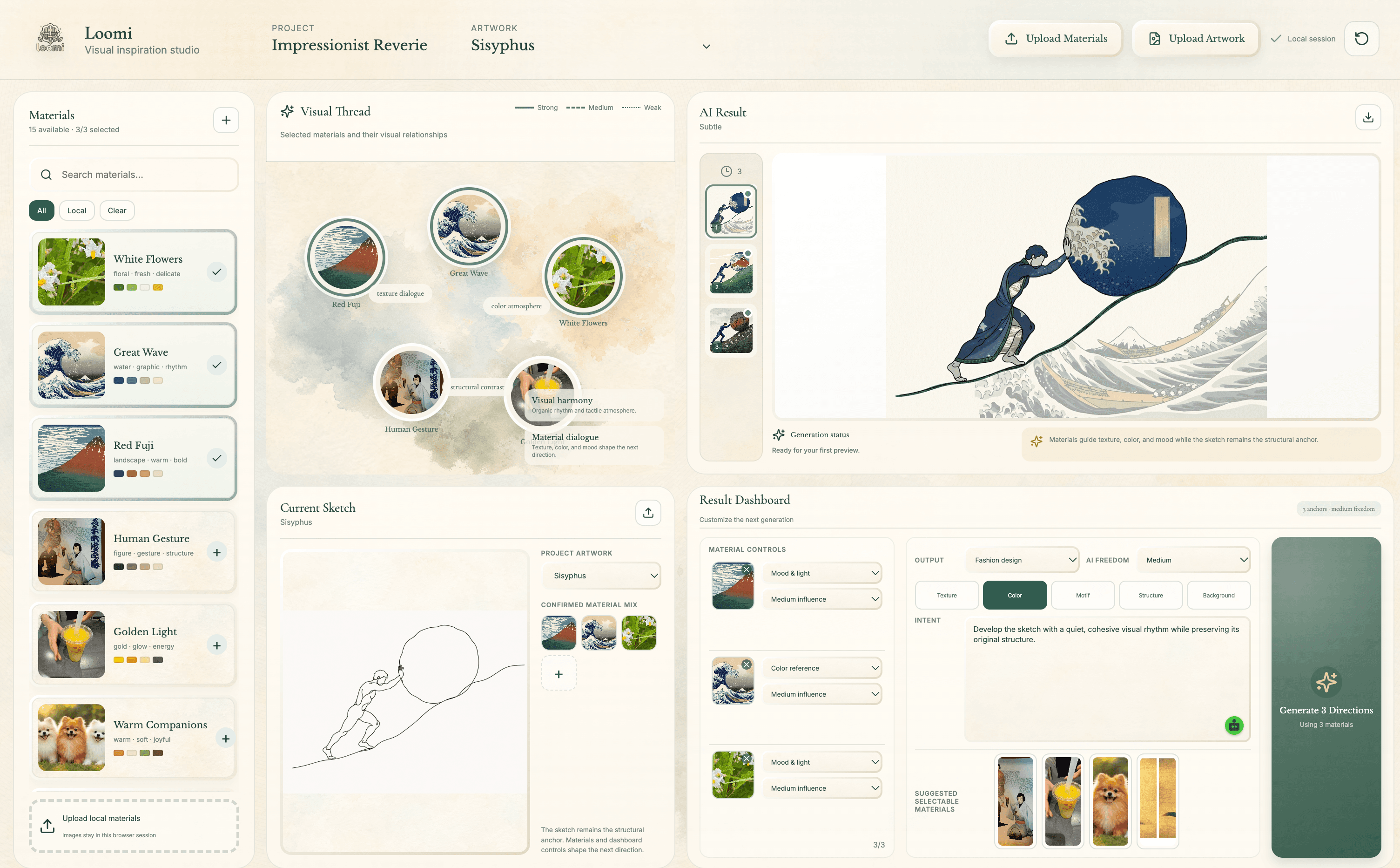
The complete workspace: materials, visual relationships, sketch and directions
The studio concept brings the material library, visual relationships, current sketch and candidate results into one workspace. Selected references contribute different qualities, while the sketch remains the structural anchor. Material controls specify the role and influence of each reference; the creator can adjust the intent, compare directions and use the next result as a starting point for further exploration.
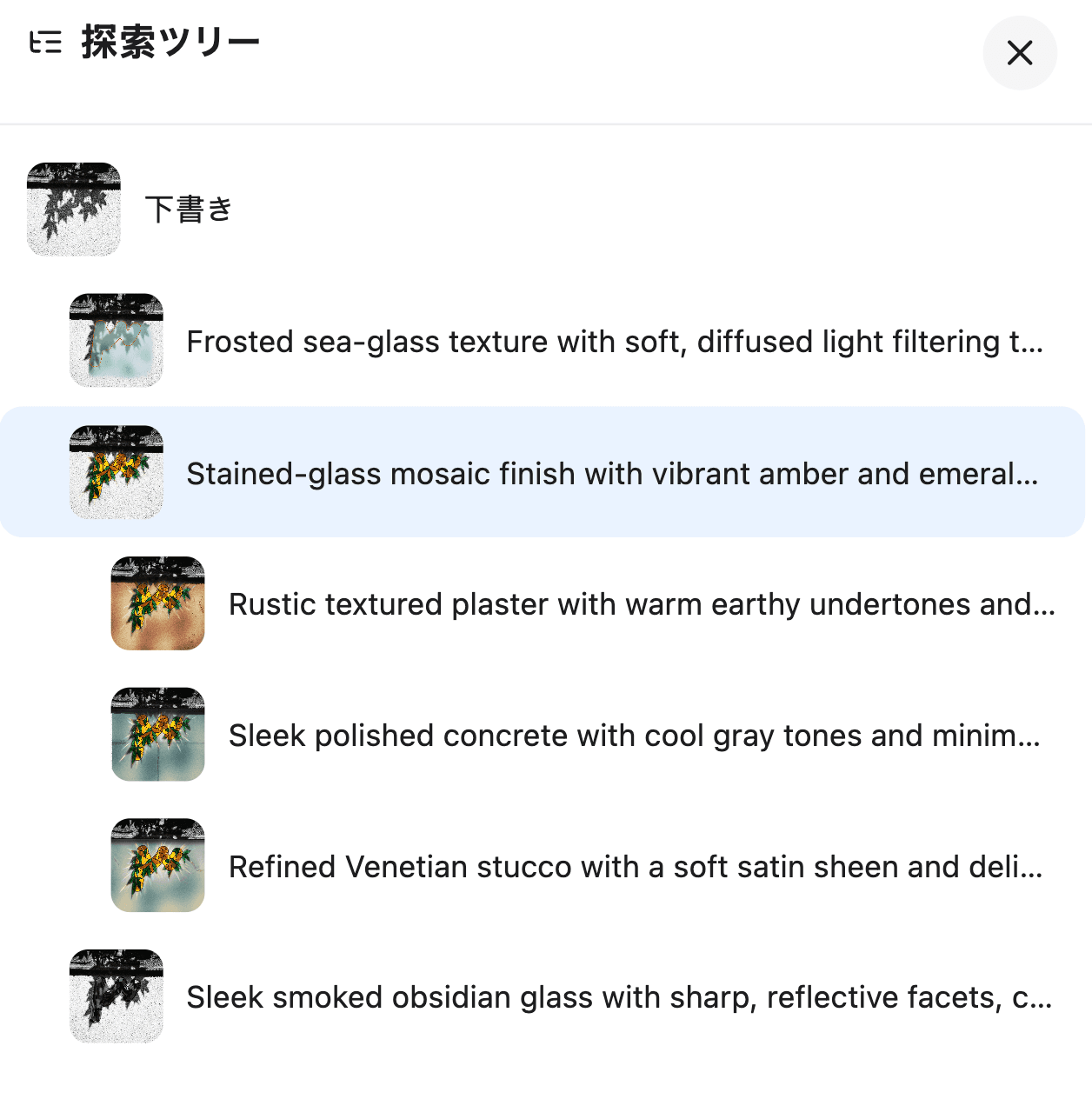
A creative exploration tree, not a disposable sequence of prompts
Loomi treats a draft as the starting node of an exploration tree. A remix creates alternative directions; selecting one opens another round of refinement while keeping the other branches available. The creator can compare directions and return to an earlier idea instead of losing it when the next image is generated.
A material library that becomes more useful over time
Loomi stores inspirations as reusable material in a database. The concept retrieves attributes such as texture, brightness, colour, line and composition, then uses those qualities to guide inspiration for a new work. Inspiration Cards expose possible relationships between fragments, so the model proposes connections that a creator can accept, ignore or reinterpret.

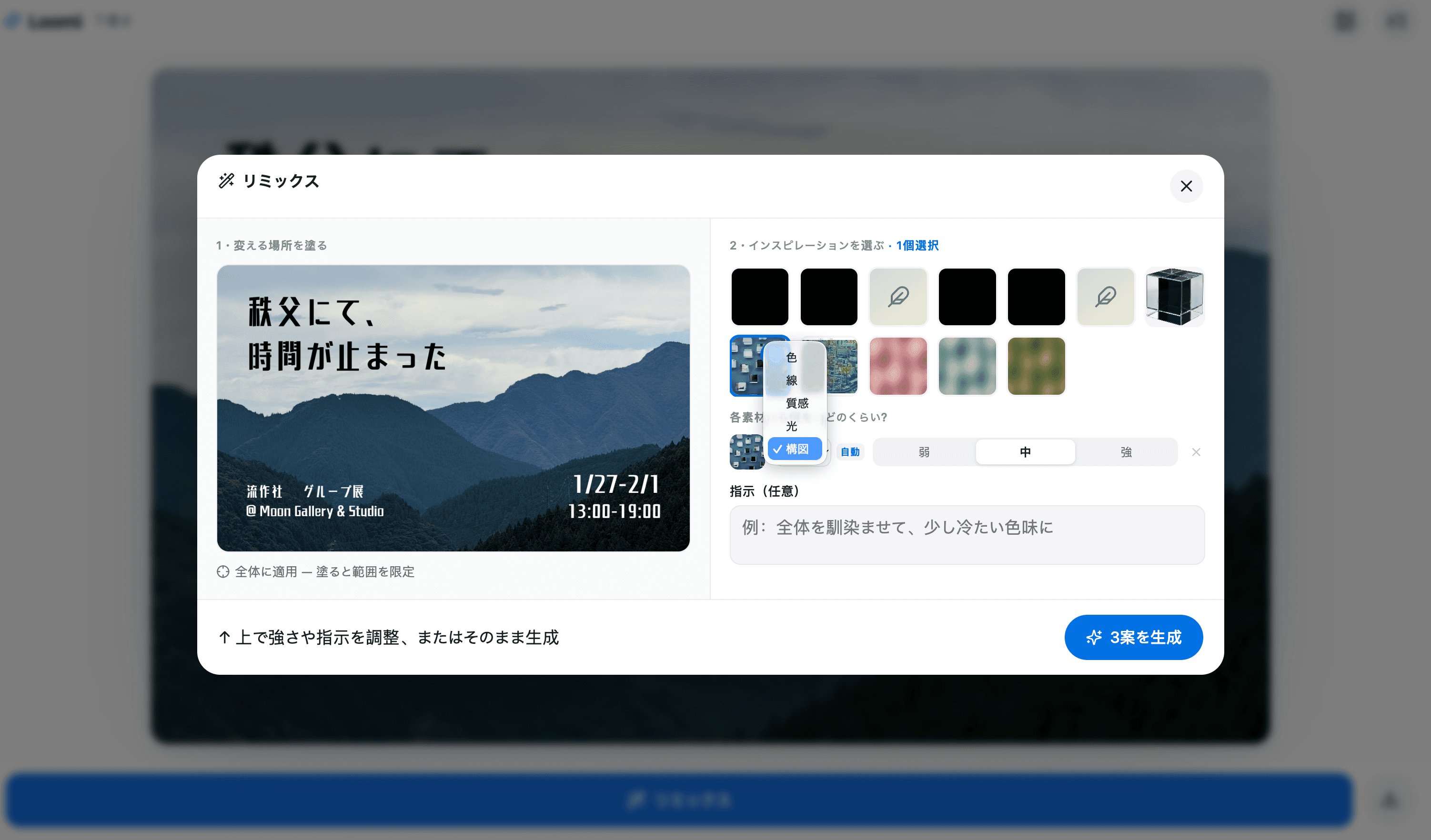
Transfer selected qualities, rather than copying an entire reference
The remix concept lets the creator select inspiration material and choose which qualities to carry into a draft: colour, line, texture, light or composition. The interface also offers an influence strength and an optional instruction. A painted mask limits the affected area; without a mask, the change applies to the whole draft. This connects material-library attributes to an explicit creative choice rather than treating a reference image as an all-or-nothing style instruction.
The model proposes; the creator decides
Draft integration brings selected materials into a working canvas, where AI-generated variations support comparison rather than silently becoming the final artwork. The intended division of labour keeps taste, selection and authorship with the creator.

What the concept demonstrated
The hackathon output is a product concept and prototype narrative, not evidence of adoption. It demonstrates how one workspace could let a material library, a set of ideas and the user's working relationship with AI grow together.
The concept interfaces make the intended interaction concrete, but they do not establish database implementation details, a numerical definition of brightness or texture, retrieval accuracy, generation quality or deployed usage. The material attributes described here are product inputs, not validated performance metrics.
